

Market Structure: How Price Organizes Itself Around Liquidity
LiquidLvy Foundation Series — Article 4
Market Structure: How Price Organizes Itself Around Liquidity
Understanding liquidity is the first step toward understanding the market.
But once you know where liquidity exists, the next question becomes more important:
How does price actually move between those liquidity targets?
The answer is market structure.
Market structure is the visible pattern price forms as it seeks liquidity. It shows whether buyers or sellers currently control the market and reveals when that control begins to weaken or change.
For every trader learning the LiquidLvy framework, structure is the language that explains what price is doing in real time.
What Market Structure Is
Market structure describes the sequence of highs and lows that form as price moves through the market.
These highs and lows reveal whether the market is trending upward, trending downward, or moving sideways.
The structure itself is simple.
An uptrend forms when price produces:
• Higher highs
• Higher lows
A downtrend forms when price produces:
• Lower highs
• Lower lows
When neither side is clearly in control, price forms a range, moving between liquidity above and liquidity below.
This is the foundation of all price movement.
Every trend, reversal, and consolidation begins with a change in structure.
Swing Highs and Swing Lows
To understand structure, you must first recognize swing points.
A swing high is a point where price stops rising and begins to move downward.
A swing low is a point where price stops falling and begins to move upward.
These turning points mark areas where liquidity was taken and where the next move began.
Swing points are not random. They are formed when the market collects liquidity and then moves toward the next available pool.
When you begin identifying these points consistently, the chart starts to make much more sense.
Break of Structure (BOS)
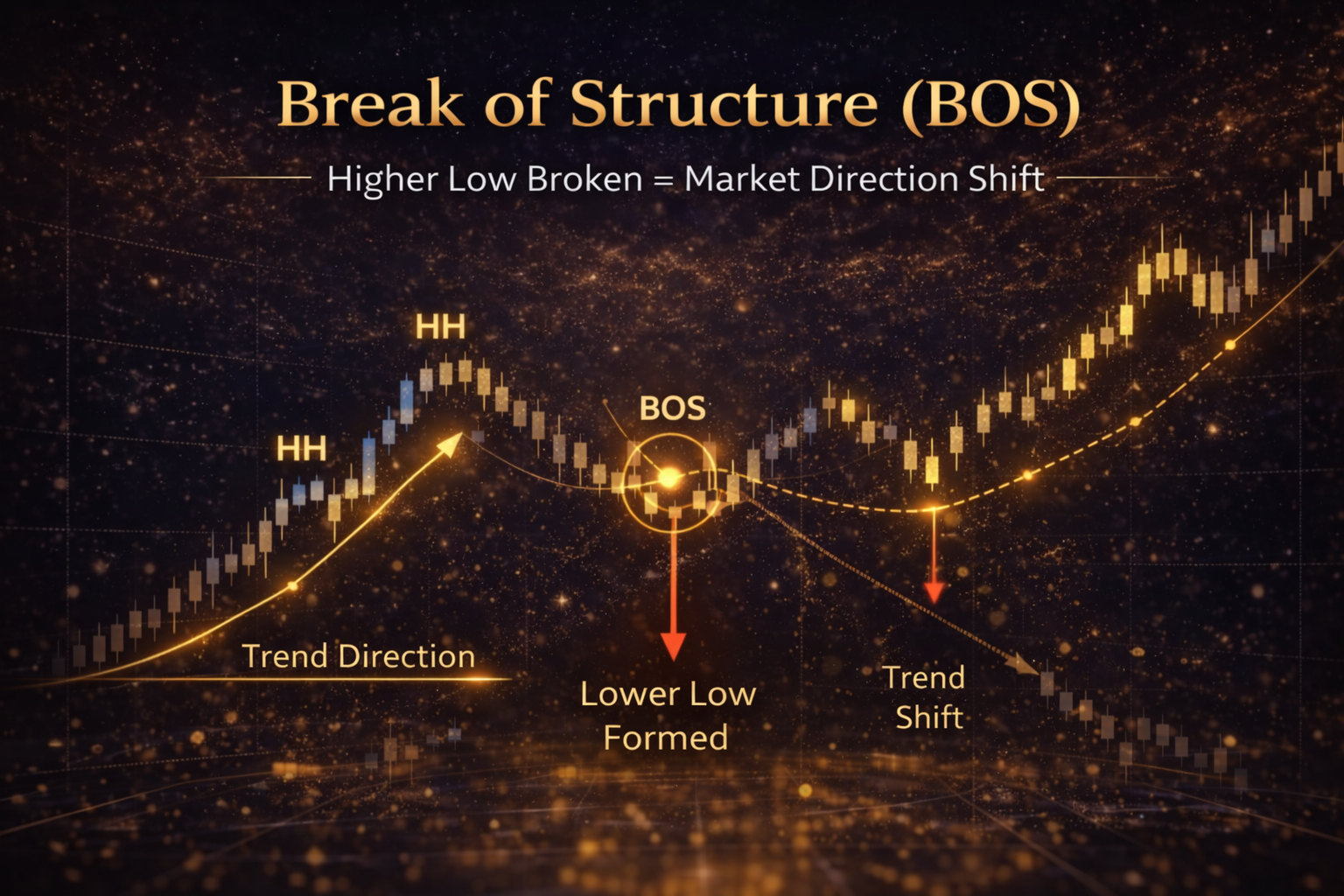
A Break of Structure occurs when price moves beyond a previous structural level.
For example:
• In an uptrend, price breaks the previous high.
• In a downtrend, price breaks the previous low.
This signals that the current directional move is continuing.
Breaks of structure are important because they confirm that momentum is still aligned with the existing trend.
However, not every break of structure leads to continuation forever.
Eventually the market begins to weaken.
And that is where the next concept becomes important.
Change of Character (CHOCH)
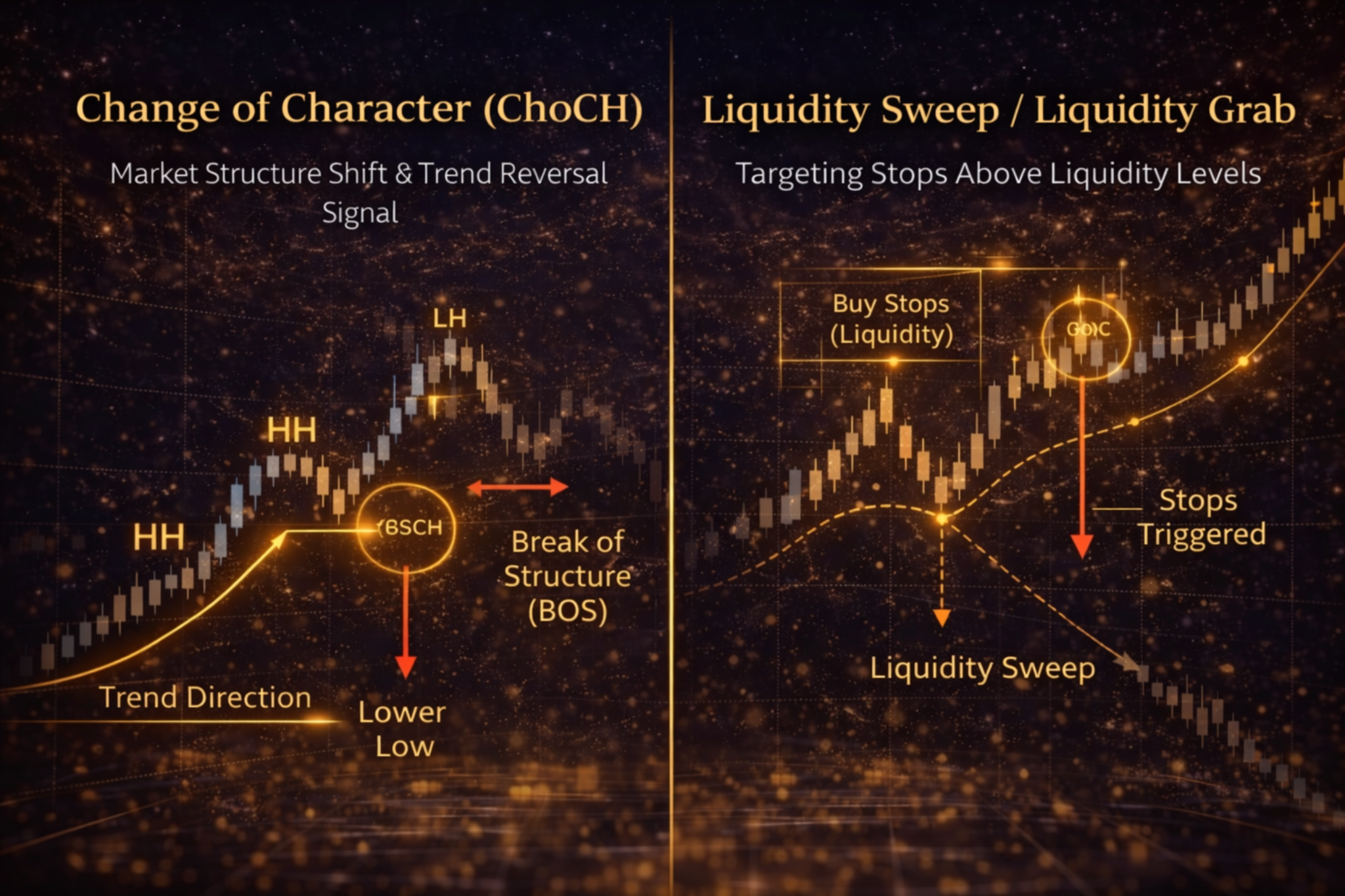
A Change of Character occurs when the market breaks structure in the opposite direction of the current trend.
For example:
• An uptrend suddenly breaks below a previous higher low.
• A downtrend suddenly breaks above a previous lower high.
This suggests that the previous trend may be losing control.
CHOCH does not guarantee a full reversal, but it is often the first signal that market behavior is changing.
When traders understand this concept, they begin to recognize early signs of transition instead of reacting after the move is already underway.
Liquidity and Structure Work Together
Liquidity drives price.
Structure reveals how price moves toward that liquidity.
Most structural shifts occur after liquidity has been taken.
For example:
Equal highs form, building liquidity above the market.
Price sweeps that liquidity with a stop run.
After the sweep, price breaks structure in the opposite direction.
To many traders this looks confusing or random.
But when you understand liquidity and structure together, the sequence becomes logical.
Liquidity is collected first.
Then structure changes.
Then the market moves toward the next target.
Why Structure Matters for Traders
Without structure, traders are reacting emotionally to price movement.
With structure, traders begin to see a framework.
Structure allows traders to:
• Understand whether the market is trending or ranging
• Recognize early signs of a shift in control
• Align trades with the current direction of price
• Avoid trading directly into structural weakness
It transforms the chart from noise into information.
And once you understand structure, the next step becomes learning how price moves between structural levels.
That is where imbalances begin to appear.
What Comes Next
Now that you understand liquidity and market structure, the next step is learning how price moves rapidly between those levels.
Those movements often leave behind imbalances in the market, commonly known as Fair Value Gaps.
Understanding those gaps is one of the most important skills for execution.
In the next article, we will explore how these imbalances form and how traders use them to identify high-probability entry zones.
Watch the breakdown here:
What is a Market Structure?